Dangerous Tree Assessment and Removal Before Construction
Most build schedules are merciless. Once excavation starts, there is little room for surprises, especially not the kind that snap in a wind event or heave a new foundation. Careful assessment and, when necessary, removal of problem trees before construction protects people, preserves the build timeline, and saves money that would otherwise leak out through delays, equipment damage, and emergency callouts. I have watched a $40,000 retaining wall budget vaporize after a storm dropped a compromised poplar across the survey line. The crew lost a week. Insurance argued about responsibility. Everyone wished the conversation about that tree had happened six weeks earlier.
What “dangerous” really means on a job site
The public often pictures a dangerous tree as a lightning-scarred hulk with a hollow trunk. More often, danger hides in less dramatic details. A healthy-looking conifer that leans 10 degrees toward the excavation can unload a root plate once trenching removes lateral support. A mature maple with a co-dominant stem and tight bark inclusion may stand for decades in calm weather, then split under crane-induced turbulence. A decayed stub twenty feet up, invisible from the ground, becomes a spear when a skid steer rattles the soil.
Arborists frame risk as a combination of likelihood and target. On a residential lot before construction, the targets expand. You are not only protecting people and structures, but also drill rigs, scaffolding, power lines, parked concrete trucks, and the schedule itself. That is why a Certified Arborist Consultation is so effective in pre-construction planning. It draws a clean map of risk, mitigation options, and permissions while there is still time to adjust layout and sequence.
The site walk that prevents change orders
A proper pre-construction walkthrough happens early, ideally during design development or before permit submission. We start by reading the site: soil texture, drainage patterns, prevailing wind, existing vegetation structure, and visible stresses. In clay-heavy ground, for example, roots tend to run shallow with broad mats. Excavation can shear those roots cleanly at the trench edge, turning a stable tree into a lever. On sandy or loamy soils, roots dive deeper, but stability often depends on wide lateral spread that conflicts with utility corridors.
I bring simple instruments and habits. A rubber mallet and a stout screwdriver to probe buttress roots. A binocular to read crown architecture. A shovel for a quick soil profile. A level and camera to document lean. If the project warrants it, a resistograph or sonic tomography can quantify internal decay without destructive coring. Good measurements anchor decisions when the inevitable debate starts about whether a tree is “fine” or “in the way.”
Tree Protection Zones matter. Builders sometimes respect the orange fencing but unknowingly pile fill inside the dripline or trench through roots to chase a routing shortcut. I prefer to specify a Tree Protection Zone in feet from the trunk based on trunk diameter and species tolerance, then back that with clear instructions, penalties, and daily checks. Most municipalities accept this logic, and many require it.
Permits, bylaws, and why you do not want to wing it
Many cities and counties protect trees above a certain diameter or species, even on private property. Removing or heavily pruning a protected tree anywhere near a build triggers permits, arborist reports, and replacement tree calculations. Skipping the paperwork invites stop-work orders that freeze your foundation pour. I keep a matrix of local bylaws within a one-hour radius because the differences are not always intuitive. One jurisdiction exempts hazard trees if an ISA Certified Arborist deems them dangerous. The next requires a second opinion and a site plan that shows replanting species. Factor that time into the schedule. Two to four weeks is common for permit review, longer if a nesting season overlay applies.
Reading the tree: field signs that matter
There is no single smoking gun, only a pattern of evidence. I watch for co-dominant stems with included bark, cracks along the stem or at unions, girdling roots, fungal fruiting bodies at the base, and soil heave or new lean after storms. In crowns, deadwood is not automatically a removal trigger, but extensive dieback, whole scaffold arm failure, or a lion-tailed profile after bad pruning suggest structural weakness.
Wind exposure changes everything. I have seen small, otherwise sound trees topple after adjacent removals opened a wind tunnel. If your build requires clearing a swath, consider the windward edge as newly exposed and elevate its risk category. Adjacent structures act as wind breaks. Remove them and you remove a buffer the tree has relied on for decades.
Underground realities deserve equal attention. Utility locates are not optional. A stump grinder can reach 12 to 18 inches in most standard passes, up to 24 inches with deep grinding. Gas laterals, water services, and shallow electrical can live in that band. I have ground hundreds of stumps without incident, and the calmest days were the ones with flags, paint, and confirmed depths.
Retain or remove: the honest calculus
There is virtue in saving trees, and good design often wraps around healthy, structurally sound specimens. Retention starts with Tree Pruning & Crown Shaping to reduce wind load, remove deadwood, and balance a lopsided canopy. Sometimes targeted pruning combined with Tree Cable and Bracing stabilizes a union that would otherwise be a removal trigger. Cabling is not a magic wand. It works best for discrete, high-value defects such as a weak co-dominant union in a species with good compartmentalization, and only if you are willing to inspect and maintain the system every few years.
If excavation will cut more than roughly 30 to 40 percent of the critical root zone, expect a decline over a one to three year horizon, often with sudden failure in storms. Some species, like willow and poplar, tolerate abuse but reward you with fast, brittle growth that becomes hazardous again. Others, like beech, sulk and decline slowly. When we forecast severe root loss on the load-bearing side, removal is the responsible call. Dangerous Tree Assessment and Removal is not about dislike of trees. It is about matching biology to the demands of a construction environment.
Fire risk should factor in as well, especially in wildland urban interface projects. FireSmart Tree Services can reshape a retained stand by removing ladder fuels, lifting crowns, and spacing stems to reduce ember travel while keeping the privacy and habitat value the client wants. That planning sits comfortably beside construction phasing if you start early.
The removal plan that respects physics and neighborhoods
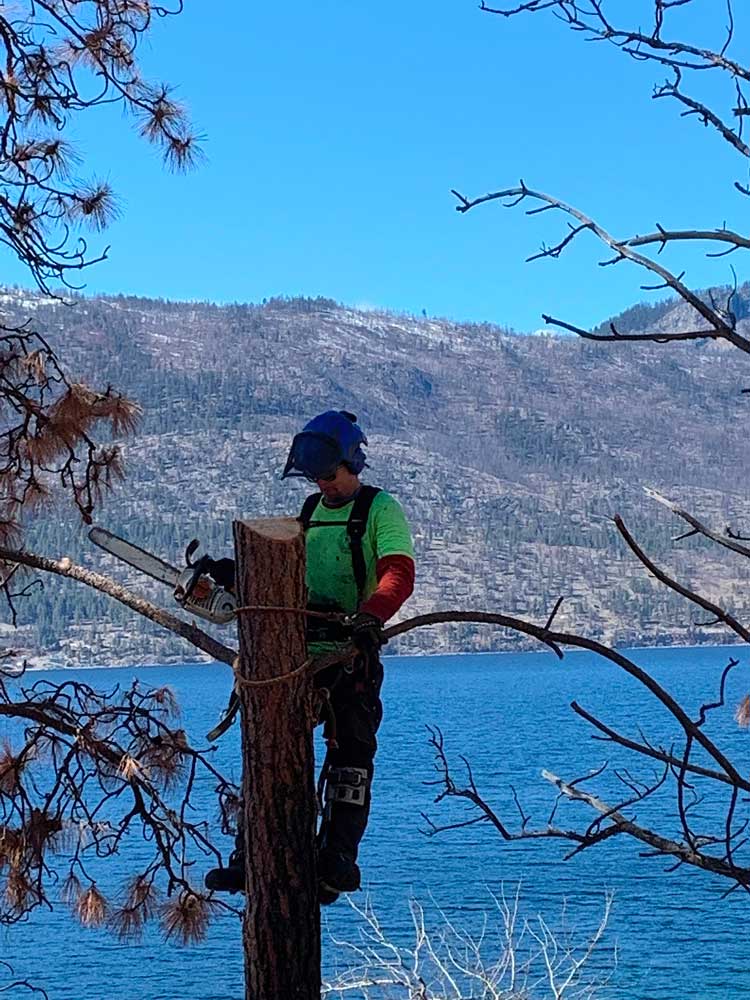
When removal is the decision, the plan should fit the site like a tailored jacket. A wide-open lot allows felling with controlled hinge and pull lines. In tight urban infill, removals happen by sections using lowering lines, rigging blocks, and, where access allows, a knuckleboom or small crane. The choice depends on clearance, ground protection, and budget. Felling is cheaper but transfers more shock into the soil, which can harm trees you intend to keep. Sectional removal costs more in rigging time and labor but plays well with delicate surroundings, overhead utilities, and neighbor relations.
A good crew thinks in three dimensions, including what happens after a piece comes down. Brush paths, chipper placement, log staging, and driveway protection should be part of the pre-job briefing with the general contractor. I request a 10 to 15 foot corridor for the chipper and log truck, plywood for lawn protection, and a defined staging area that will not conflict with surveyors or soil stockpiles. If the crane is coming, coordinate with the street use permit and notify neighbors. It is easier to keep the peace when everyone knows why a truck will block the lane from 8 to noon.
What to prepare before the arborist arrives
- A current site plan or survey with property lines and proposed structures marked
- Known underground utility locations, even if preliminary
- The build schedule by phase, including excavation and crane days
- Municipal tree protection or removal permit requirements, if known
- Your priorities for retention, privacy, and FireSmart goals
Safety and liability in the real world
Tree work carries risk. On active or soon-to-be-active construction sites, the risk multiplies. Confirm that your Tree Removal Services provider carries workers’ compensation and at least 2 million in liability coverage, ideally more for urban crane work. Ask who is responsible for underground strikes and whether 811 or local equivalents have been called. If you hear hemming and hawing, find another provider. Also, verify that the lead on site is an ISA Certified Arborist or has equivalent field experience. Certification by itself does not make someone competent at rigging in wind, but it does signal that the person speaks the language of risk assessment and tree biology.
Emergency Tree Services are not a substitute for planning, but bad weather, excavator bumps, and surprise decay happen. Put the arborist’s number on the superintendent’s board with notes on after-hours procedures. I prefer to pre-authorize thresholds so the crew knows when they can spend to make a situation safe without an approval loop. That keeps small problems from growing teeth.
Stump Removal & Grinding, and why it matters to builders
Builders sometimes ask to leave stumps for later to save money in the early stages. On paper, that makes sense. In practice, stumps become trip hazards, attract termites in some regions, and can heave grades if left high. More importantly, utility trenching changes course when it hits stumps, creating awkward bends and shallow cover that become call-backs. Grinding early and to the right depth prevents those headaches.
Plan grinding depths to match your future use. For turf, 8 to 12 inches works. For hardscape or footings, ask for deep grinding to 18 to 24 inches and removal of grindings that are too woody to compact. Grindings make poor structural fill. I often specify removal and replacement with screened topsoil in planting zones and compactable base in load areas. That detail alone has saved clients from settling pavers and spongy patio edges.
https://caidenbsse862.almoheet-travel.com/root-to-top-stump-removal-grinding-done-rightRespect for wildlife and seasonal constraints
Most regions protect active nests for migratory birds and raptors. That can slow or halt removals from spring into early summer, depending on latitude. An experienced arborist can perform a pre-work nesting survey and, if needed, bring in a qualified biologist for higher-risk species. The calendar is not always your friend. If you have tight milestones, schedule removals outside those windows or budget for survey and monitoring. I have delayed a 60 foot cottonwood removal at the edge of a build because a pair of Cooper’s hawks moved in. We pivoted, advanced foundation work on the opposite side, and came back later with everyone’s cooperation intact.
Bats use tree cavities and peeling bark as roosts. Winter and late summer work tends to be simpler from a compliance perspective, but verify local requirements. The best time to remove is when the tree biology, wildlife cycles, and your schedule align. Sometimes that alignment means swapping sequencing with your builder for a few weeks.
Integration with design and layout
An early Certified Arborist Consultation can influence design in subtle, cost-saving ways. Shifting a driveway by two feet to clear a root flare turns a removal into a retention with modest pruning. Lighting designers can aim up-lights to celebrate a retained specimen while keeping heat off the bark. On larger parcels, aligning the house to preserve a cluster rather than a solitary tree helps wind-firmness and aesthetics. Even when removals are unavoidable, design can soften the transition. Replant early with appropriately sized stock, plant in groups, and water intelligently. Newly graded soils shed and pool water in unfamiliar ways. Your arborist can specify species that handle that reality, not just species that look good on a mood board.
Using pruning, cabling, and bracing as mitigation
Tree Pruning & Crown Shaping is more than a haircut. Reduction cuts redistribute load toward the trunk, thin out sail effect, and remove rubbing or compromised branches. The work is precise. Poorly placed cuts invite decay and spur weak, epicormic sprouts that fail later. When reduction alone will not address a union defect, Tree Cable and Bracing adds redundancy. I like static bracing rods for tight unions at risk of shear, paired with dynamic or static cables higher in the crown depending on species and movement patterns.
These systems have responsibilities attached. Annual or biennial inspections confirm tension, anchor integrity, and wood condition. Hardware lasts a long time, but not forever. Place inspection dates on the same calendar where you track gutter cleaning or furnace maintenance. Skipping follow-up defeats the purpose.
Case notes from the field
A teardown-and-rebuild on a small city lot featured two Norway maples, both 20 inches DBH, flanking the planned driveway. Initial sentiment leaned toward removal. A closer look found one with a tight codominant union and included bark. The other had a single stem, wide-angled scaffold branches, and healthy, evenly distributed roots, verified with a test pit. We removed the flawed one using sectional rigging to protect a neighbor’s garage. The keeper received a 15 percent structural reduction, deadwood removal, and a dynamic cable across two large laterals overhanging the future driveway. We widened the driveway cut by 18 inches to avoid a buttress root. Seven years later, the tree is vigorous, the cable has been inspected twice, and the driveway has not heaved.
On a rural new-build near the interface, a cluster of lodgepole pines screened the house site. The client wanted privacy but also a safer property after a bad fire season. We removed three hazard stems with significant root decay, then applied FireSmart Tree Services across the retained cluster: lifted lower branches to break ladder fuels, thinned to improve crown spacing, and pruned back branches over the roof line. We chipped and removed fine fuels, kept larger logs for milling, and created a firewood stack at a safe setback. The house gained a layered, natural look without the tinderbox effect.
Cost ranges and timelines that help planning
Every site is different, but ballparks help. Simple felling in open ground might start in the low hundreds per tree, rising with diameter. Sectional removals in tight urban spaces typically range from low four figures to several thousand dollars depending on complexity, access, and crane time. Stump grinding usually prices by diameter at ground level, often from 10 to 18 dollars per inch, with add-ons for deep grinding and grindings removal. Cabling and bracing, including hardware, tends to land in the mid to high hundreds, more for large crowns with multiple anchors. Emergency Tree Services command a premium, especially after storms when crews are stretched.
Timelines depend on permits, weather, and nest surveys. If you are disciplined with paperwork and book early, expect two to six weeks from assessment to work completion. If a crane is involved, schedule farther out. During peak build season, good crews book a month or more ahead. Treat your arborist like any other critical trade and slot the work in your Gantt chart.
Wood waste, reuse, and clean sites
Leaving a clean pad for excavation day is part of the job. Brush becomes chips. Unless the site needs mulch, I generally haul chips, because fresh chips against foundation lines or in planting beds can tie up nitrogen and invite fungus gnats. Logs can go to firewood, sawmills, or specialty reclaimers. Homeowners like keepsakes. Milling a slab for a bench or countertop adds a story to the new house. Communicate those wishes before the saws come out so the crew can cut to length and protect the best pieces. Stumps and grindings, as noted, need purpose or removal. I prefer to finish with swept streets, intact irrigation where we worked around lawns, and photo documentation for the builder’s records.
Sequencing with other trades
Tree work intersects with survey, demolition, utilities, and excavation. The simplest sequence is survey, arborist assessment, permit application, removals and pruning, stump grinding, then tree protection fencing set hard before demo and dig. After that, no vehicle inside the fence, no soil stockpiles within the Tree Protection Zones, and no rinsing concrete where roots will drink. If a crane is booked for demo, sometimes we piggyback to lift large tree sections, saving setup costs and road closures. That collaboration only works if the superintendent and arborist speak early.
When last-minute surprises appear
Even with excellent planning, surprises happen. A lean intensifies after a week of heavy rain. A backhoe exposes a root cavity. A windstorm strips a major leader. When the site is hot and trades are stacked, decisive, safe action matters more than perfect aesthetics. Your arborist should be able to offer triage: immediate make-safe cuts, temporary guying where appropriate, or a full removal followed by site stabilization. Dangerous Tree Assessment and Removal is not a one-and-done box to check. It is an ongoing conversation as the site changes.
A short, practical sequence for removal day
- Morning briefing with the superintendent to confirm drop zones, traffic control, and utility status
- Rigging and test cuts to verify wood condition, adjusting the plan if decay shows up
- Sectional takedown or felling, with a spotter managing pedestrian and vehicle movements
- Stump cutting and grinding to specified depth, followed by cleanup and site protection reset
- Photo documentation and a short debrief with any follow-up recommendations
Choosing the right partner
Look for a company that is comfortable across the full spectrum: Certified Arborist Consultation, Tree Removal Services, Tree Pruning & Crown Shaping, Tree Cable and Bracing, Stump Removal & Grinding, and FireSmart Tree Services where relevant. A firm that treats emergency calls as part of the job but not the business model likely plans well and communicates clearly. Ask for references from builders or landscape architects. Walk a recent site with them. The ground will tell you whether they protect soil, respect neighbors, and think ahead.
What you do before the first bucket of soil leaves the ground dictates how the site behaves for months and how the landscape ages for years. The difference between a smooth build and a fraught one often comes down to how carefully you read the trees, how honestly you weigh risk, and how cleanly you execute removals and retention. Treat trees like the living structures they are. They reward early, thoughtful attention with safety, beauty, and fewer headaches for everyone involved.
Ace Tree Services Ltd.
Name: Ace Tree Services Ltd.Address: 4656 Wallace Hill Road, Kelowna, BC
Postal code: V1W 4C2
Phone: 250-212-9593
Website: https://acetree.ca/
Hours:
Monday: 7:00 AM - 5:00 PM
Tuesday: 7:00 AM - 5:00 PM
Wednesday: 7:00 AM - 5:00 PM
Thursday: 7:00 AM - 5:00 PM
Friday: 7:00 AM - 5:00 PM
Saturday: 7:00 AM - 5:00 PM
Sunday: Closed
Open-location code (plus code): RHF8+8G Kelowna, British Columbia, Canada
Map/listing URL: https://www.google.com/maps/place/Ace+Tree+Services+Ltd./@49.8232606,-119.4337283,659m/data=!3m2!1e3!4b1!4m6!3m5!1s0x537d8b1d074815c5:0x450b88afa7a41435!8m2!3d49.8232606!4d-119.4337283!16s%2Fg%2F11ydkpnh22
Embed iframe:
"@context": "https://schema.org", "@type": "HomeAndConstructionBusiness", "name": "Ace Tree Services Ltd.", "url": "https://acetree.ca/", "telephone": "250-212-9593", "address": "@type": "PostalAddress", "streetAddress": "4656 Wallace Hill Road", "addressLocality": "Kelowna", "addressRegion": "BC", "addressCountry": "CA" , "openingHoursSpecification": [ "@type": "OpeningHoursSpecification", "dayOfWeek": "https://schema.org/Monday", "opens": "07:00", "closes": "17:00" , "@type": "OpeningHoursSpecification", "dayOfWeek": "https://schema.org/Tuesday", "opens": "07:00", "closes": "17:00" , "@type": "OpeningHoursSpecification", "dayOfWeek": "https://schema.org/Wednesday", "opens": "07:00", "closes": "17:00" , "@type": "OpeningHoursSpecification", "dayOfWeek": "https://schema.org/Thursday", "opens": "07:00", "closes": "17:00" , "@type": "OpeningHoursSpecification", "dayOfWeek": "https://schema.org/Friday", "opens": "07:00", "closes": "17:00" ], "geo": "@type": "GeoCoordinates", "latitude": 49.8232606, "longitude": -119.4337283 , "hasMap": "https://www.google.com/maps/place/Ace+Tree+Services+Ltd./@49.8232606,-119.4337283,659m/data=!3m2!1e3!4b1!4m6!3m5!1s0x537d8b1d074815c5:0x450b88afa7a41435!8m2!3d49.8232606!4d-119.4337283!16s%2Fg%2F11ydkpnh22"
Ace Tree Services Ltd. provides professional tree removal, pruning, stump grinding, emergency response, and arborist consultations for properties in Kelowna and across the Okanagan Valley.
The company works with homes, commercial properties, and municipal settings where tree work needs to be planned carefully around buildings, fences, driveways, landscaping, and other site constraints.
Based in Kelowna, the team is positioned to help nearby neighbourhoods and surrounding Okanagan communities with routine tree care and time-sensitive storm cleanup.
Customers looking for careful tree work often want a crew with certified arborist training, insurance, and a methodical approach to higher-risk removals.
Services also include dangerous tree assessment, cabling and bracing, and wildfire risk reduction tree work for properties that need longer-term planning.
To request a quote or discuss tree care options, call 250-212-9593 or visit https://acetree.ca/.
A public map listing is available to help customers confirm the business location and get directions before a site visit or estimate.
For Kelowna property owners who need pruning, removals, or emergency tree help, a local tree service can make it easier to schedule site-specific recommendations and cleanup.
Popular Questions About Ace Tree Services Ltd.
What services does Ace Tree Services Ltd. provide?Ace Tree Services Ltd. lists tree removal, stump removal and grinding, tree pruning and crown shaping, emergency tree service, arborist consultation, dangerous tree assessment and removal, cabling and bracing, and wildfire risk reduction tree work.
Who does Ace Tree Services Ltd. serve?
The company describes its work as serving homes, businesses, and municipalities in Kelowna and across the Okanagan Valley.
Is emergency tree help available?
Yes. Emergency service is listed for downed or uprooted trees, dangerous tree assessment, stabilization work, and branch cleanup. If a tree is near power lines, the safest first step is to stay clear and contact the utility provider before any tree work begins.
Do I always need a permit to remove a tree?
Not always. Permit requirements can depend on where the tree is located and whether it is near a creek, lake, steep slope, or another protected area. It is best to check local rules for the specific property before removal work starts.
How deep does stump grinding usually go?
Standard stump grinding is typically described as going about 6 to 12 inches below ground level, which is often enough for grass or surface landscaping. Deeper grinding may be possible when site plans call for it.
How much of a tree can be safely removed at one time?
That depends on the species, age, health, and structure of the tree. In practice, good pruning is usually about removing the right limbs for health, clearance, and structure rather than chasing a fixed percentage.
What are common signs that a tree may be dangerous?
Large dead limbs, visible cracks, a new lean, root damage, canopy dieback, or storm-related damage can all be warning signs. Trees near structures deserve extra attention when any of those issues appear.
What is cabling and bracing in tree care?
Cabling and bracing are support systems used to reduce the risk of failure in trees with structural weaknesses that may still be worth preserving. They are generally used to add support, not to replace good assessment and ongoing maintenance.
How do I contact Ace Tree Services Ltd.?
Call 250-212-9593.Website: https://acetree.ca/.
Landmarks Near Kelowna, BC
Downtown KelownaThe downtown core is a practical reference point for lakefront neighbourhoods, mixed-use streets, and central residential properties. If your property is near downtown, tree pruning, removals, and cleanup can be planned around tighter access and nearby structures.
Knox Mountain Park
This well-known park north of downtown is a recognizable landmark for nearby homes and hillside properties. If you are close to this area, ask about tree assessment, trimming, or removal work suited to sloped sites.
Mission Creek Greenway
The greenway runs through several parts of Kelowna and is a useful landmark for nearby residential areas. If your property borders or sits near this corridor, site-specific tree planning is especially important.
Pandosy Village
Pandosy is one of Kelowna’s most recognizable neighbourhoods and a common reference point for south-central properties. If you are nearby, request help for pruning, removals, or storm cleanup around homes and small commercial sites.
Rutland
Rutland is a major east Kelowna neighbourhood with a mix of residential and local commercial properties. If you are located in or near Rutland, tree work can be scheduled for both routine maintenance and urgent situations.
Landmark District
This central business-focused area is a practical landmark for offices, service properties, and nearby residential streets. If your site is near the district, ask about careful tree work around parking, access lanes, and built-up lots.
Kelowna’s North End
The North End sits on the edge of downtown and is a useful reference for nearby homes, industrial sites, and commercial properties. If you are in this part of the city, request tree care based on the layout and constraints of the lot.
Airport District
The Airport District is a recognizable north Kelowna reference point for surrounding properties and access routes. If you are in this area, ask about tree services for residential acreage, commercial sites, or roadside cleanup needs.
Glenmore & Dilworth
These established Kelowna neighbourhoods are useful landmarks for central and north-central service calls. If your property is nearby, pruning and removal work can be tailored to mature trees and established landscapes.
Highway 97 Corridor
Highway 97 is one of the city’s main travel routes and a common way to describe location within Kelowna. If your home or property is just off the corridor, a clear landmark reference can help speed up quote scheduling and site planning.