FireSmart Tree Services for Perimeter and Pathways
Wildfire risk shows itself in small details before it roars onto the news. A crust of dry needles beneath a fence line, ladder fuels tucked under a cedar by the driveway, a low branch rubbing a power drop at the side gate. When you manage trees along a property’s perimeter and the pathways that connect entrances, service lanes, and evacuation routes, you’re shaping how fire will behave when it arrives. I have walked sites the day after a grassfire where embers skipped a green lawn and set a bark nugget bed smoldering beside the front walk. I have also seen a neatly thinned driveway, pruned to clean vertical clearance and mulched in gravel, stop a creeping surface fire in its tracks.
The FireSmart idea is simple to say and hard to do well: reduce flammable material, break up heat pathways, and prepare trees so they fail predictably rather than catastrophically. Around perimeters and along paths, that takes disciplined pruning, selective removals, careful surface choices, and regular attention to the way wind and slope shape risk. Good tree work in these corridors doubles as daily convenience. If you can drive in with clear sightlines, walk out at night without snagging a sleeve, and read your house number from the street through clean structure, you have already made a difference for both wildfire and everyday safety.
How fire moves at the edge of a property
Perimeters and paths tend to collect three things fire likes: continuity, wind, and ignition. Continuity shows up as hedges planted tight, fence lines draped in vines, and uniform tree rows that let fire climb from ground to crown. Wind accelerates along roads and driveways, and it piles embers on the leeward side of structures and tall plantings. Ignition sources gather where people move, including vehicle exhausts, mowers, and occasional sparks from metal on stone.
On sloped sites, heat preheats the uphill fuels, so a hedge midway up a bank can transmit heat uphill into crowns faster than you expect. In a canyon or draw, wind funnels as if through a nozzle. These tendencies do not mean you have to clear everything back to bare soil. The practical move is to design interruptions. Think in vertical layers and in horizontal spacing. Break the ladder from the ground into the canopy. Interrupt the horizontal line of crowns so flame length cannot bridge it. Along paths, make sure the surface itself is not kindling.
A FireSmart plan often works in three nested zones. Inside the first couple of meters, you want non combustible materials and neat, irrigated plants, with no bark piles or duff against the siding or fence posts. From there out to roughly ten meters, you lift and thin to keep flames on the ground and slow. Out to thirty meters, you ladder back crowns and space groupings so a burning patch runs out of easy fuel. Perimeters and paths typically sit in that first and second zone, and that is where careful tree work pays off fastest.
Reading a site before you touch a saw
I begin by walking the lines you use most often. Where is your main approach and where would you leave in a hurry at night, in wind, or in smoke? Stand where fire might enter, usually the downwind edge during hot, dry periods. Look uphill. Mark your heat and wind corridors. Note overhead utilities and low lateral lines. Pay attention to changes in the understory. Dry grasses sliding under the dripline of a fir mean short time to torching during peak heat. A bed of fresh green ice plant under a eucalyptus might still force flames to lay down at the edge of a path.
I also look for the fingerprints of stress in trees. Sparse foliage at the tips, dead twigs inside the crown, and little fruiting bodies of decay fungi on the trunk usually show up years before failure. Along a pathway, a limb failing in a wind event can block an exit. Along a perimeter, it can open a route for embers to enter a previously sheltered interior. A Certified Arborist Consultation at this stage can save work later. An assessment grounded in standards, not guesswork, lets you target the specific trees that shift your risk.
Perimeter priorities that change fire behavior
A tidy perimeter behaves like a low flame speed break. I do not aim for sterile, just rational gaps and clean lines. Fence lines and hedges are prime candidates for rethinking. If you have a continuous evergreen hedge at the property edge, resist the urge to shear it into a tight box right to the ground. That encourages dense thatch and trapped duff. Instead, lift the hedge line so you can see light under it, prune out dead interior wood, and harden the surface below with gravel rather than bark. Where the hedge touches a gate or corner, break it into panels with a one to two meter interruption planted in non flammable groundcovers or left as a hard surface.
Trees near the street https://jsbin.com/?html,output are often planted with equal spacing for aesthetics, then grow together into a single fuel mass. If crowns are touching, I open them until I can read daylight between trees. On smaller trees, that may be as little as a third of a meter. On larger conifers, two meters of horizontal separation slows crown to crown transmission. I also prune lower limbs so fire cannot climb. In many neighborhoods, lifting to two and a half to three meters is enough to keep grassfires off the crown while maintaining privacy above. On rural lanes or driveways used by service trucks and fire engines, lift to about four and a half to five meters of vertical clearance.
Flammable mulch along the outside perimeter is a common oversight. Bark and shredded wood carry flame along fences like a fuse. Swap that top dressing within the first one to two meters of your perimeter for crushed rock, decomposed granite, or compacted fines. If you like the look of planted beds, keep them green and leave a hand’s breadth of bare mineral soil around trunks to prevent girdling rot.
Pathways as lifelines, not just landscaping
Paths and driveways have jobs in a wildfire that go beyond walking or parking. They are access lanes for responders, egress routes for you, and firebreaks that should interrupt low and mid height fuels. I have turned a client’s pleasant cedar arched driveway into a safer corridor by selectively raising the canopy, thinning interior branches, and spacing the crowns. It still reads as an alley of trees, but now you can see the sky, and a flame front has to work harder to reach across.
Overhead clearance matters more than people think. In winter, snow and ice load branches. In summer, heat makes resin rich species more brittle. Either way, that one sagging branch over a narrow bend is the place a truck stops or a car gets pinned. Maintain a consistent envelope of clearance from ground to crown. Keep sightlines open around curves. Trim back the interior side of corners to avoid sideswipe damage to branches and vehicles.
Underfoot, the surface should not smolder. Bark chips on a shaded path are fine in garden beds, not on an evacuation route. Stone, concrete, compacted decomposed granite, or well maintained gravel perform better when embers rain. If you want a soft surface, blend in mineral soil that does not carry fire easily, and rake out leaf litter routinely during the dry season. At the edges, prevent ladder fuels. That means removing dense, twiggy shrubs under trees along the path and replacing them with low, hydrated plants or hardscape.
Pruning and crown shaping that reduce risk without disfiguring trees
Tree Pruning & Crown Shaping for FireSmart work is not about hacking everything into uniform spheres. It is targeted removal to change how heat and wind move through the crown. I follow ANSI A300 guidance because it protects tree health while meeting goals. The practical steps are straightforward. Start by removing dead, diseased, and broken branches. Clear back growth that directly conflicts with structures or utilities. Then thin selectively to reduce density, especially in the interior where still air and fine twigs trap embers. Finish with a lift of lower limbs to break that ground to crown ladder.
Timing matters. For most species, late winter into early spring is a good window. Sap is moving, but heat is not at peak. For oaks and some disease susceptible species, local timing rules apply. The wrong month invites pathogens. Use clean cuts, avoid flush cutting, and never leave stubs that die back and become decay handles. Do not lion tail a crown by stripping the interior and leaving foliage only on the tips. That looks neat but shifts weight outward, increases wind throw, and lets light flood the trunk, which can scorch thin barked species. A good crown shape reads layered and breathable, like a hand with spread fingers rather than a clenched fist.
When thinning for fire, respect photosynthetic needs. Remove no more than 20 to 25 percent of live foliage in a single season on mature trees. Younger trees can handle a bit more, but never strip them. If a tree is already stressed by drought, prune in stages. Hydration before and after a light prune helps, and a mulch ring of non combustible mineral material keeps roots cool without adding surface fuels.
Reinforcing weak structure near paths with tree cable and bracing
I do not like to take down a mature tree that gives shade, habitat, and character unless the risk is unacceptable. Along paths and driveways, the stakes are higher, and that is where Tree Cable and Bracing comes into its own. Cables can stabilize co dominant stems with tight unions or old storm wounds. Braces can pin cracks in large leaders. Properly installed, they reduce the chance of a sudden split during high winds or heavy snow, buying years for a valued tree.
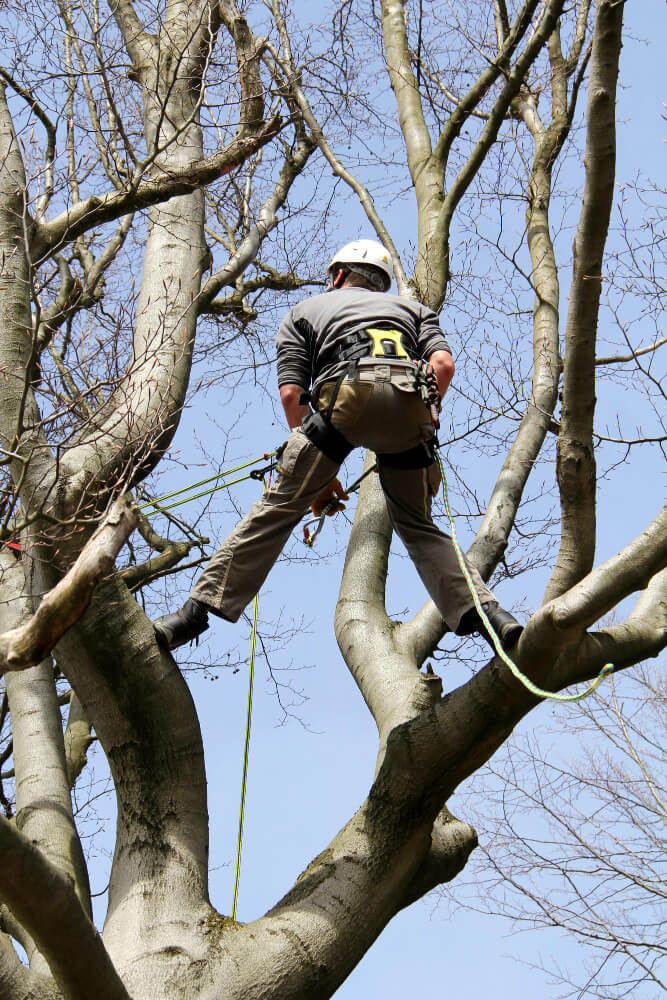
Cabling is not a cure for all defects. It requires inspection after big storms and on a regular schedule, typically every one to three years. Hardware needs to be placed at the correct height and angle to distribute load. A Certified Arborist Consultation ensures the system is sized and installed to standard, and that pruning accompanies support. Without a complementary thinning to reduce sail, even a well installed cable can see forces the tree was not designed to carry. I build cabling into a larger FireSmart plan when a tree serves as a landmark, shade for a path, or habitat that we do not want to lose, and the defect is manageable. If decay extends into the root plate or the trunk sounds hollow across a wide sector, cabling is a stopgap at best.
When removal is the safest fire decision
Dangerous Tree Assessment and Removal is not a last resort so much as a responsible choice when risk and value do not balance. Assessment tools range from a mallet and a practiced ear to advanced instruments that map decay. Fungal conks at the base, a wide lean with soil heave, large dead sections in the crown, or long vertical cracks are all red flags. In FireSmart planning along perimeters and paths, I pay special attention to what we call targets. If a failure can block an exit, land on a vehicle in a likely spot, or fall into a neighbor’s escape route, the threshold for action drops.
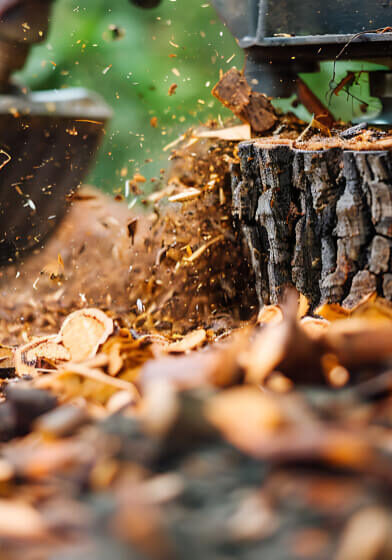
Tree Removal Services set the stage for the rest of the work to be effective. Taking out a dangerous tree often opens the canopy and breaks a continuous crown, allowing remaining trees to stand alone with healthier spacing. The removal plan needs detail. Is there room for straight felling, or will it require sectional removal? Are there utilities in the drop zone? What is the plan for debris? When a removal is part of a fire corridor improvement, I often pair it with Stump Removal & Grinding. Grinding to a depth of 20 to 30 centimeters eliminates tripping hazards along a path and reduces resprout potential in species like willow and poplar. On perimeters near hardscape, I sometimes leave a lower cut stump if the root system holds a slope. Mulch the area with mineral product, not wood chips, and consider a root barrier if lateral roots were pushing up a path.
Surface fuels and material choices that matter
You can do excellent pruning and still leave a fuse on the ground. Fine fuels carry fire faster than big logs, and they are often the least glamorous part of the job. Along paths and property lines, rake out and remove leaf litter and small twigs regularly during the dry months. Keep that first meter or two of ground cover decidedly non flammable. Gravel in the five to ten millimeter range compacts nicely and does not roll underfoot. Decomposed granite fines, treated with a stabilizer in high traffic areas, give a tidy finish that does not lift in wind.
Avoid rubber mulch anywhere in a fire corridor. It burns hot and clings, which is the exact opposite of what you want. If you like a natural look, tuck ornamental boulders and low moisture holding succulents into the edge of a gravel band. Drip irrigation under that edge keeps plants hydrated without presenting a wet thatch. Around bases of trees, leave a collar of bare soil to prevent moisture against the bark. Where perimeters meet fences, swap out wood boards for metal or use a course of non combustible material at the bottom. Vines on fences make a fine privacy screen but demand monthly attention in the dry season to remove dead thatch, especially on chain link that faces a public right of way.
A concise checklist for a FireSmart pathway corridor
- Maintain 4.5 to 5 meters of vertical clearance on driveways and 2.5 to 3 meters on footpaths, adjusted for vehicle types and local codes.
- Thin and shape crowns so adjacent tree canopies do not touch, aiming for clear daylight between trees along the route.
- Replace bark and shredded wood mulches within the first meter or two of the path with gravel, decomposed granite, or other mineral surfaces.
- Remove ladder fuels by pruning up lower branches and substituting low, hydrated plants or hardscape at path edges.
- Inspect after wind or snow events, and schedule Emergency Tree Services promptly if you see fresh cracks, hanging branches, or root plate movement.
Emergency response and continuity of use
Fires are only one of the events that stress tree corridors. Windstorms, wet snow, and heavy rains change structure fast. An Emergency Tree Services team that knows your site can triage a downed limb, reopen an access lane, and make a damaged tree safe without losing the entire plant. I encourage clients to keep a photographic inventory of perimeters and paths, including shots of key trees and utilities. After a storm, send those photos along with fresh images. A good crew will prioritize hazards that block egress first, then address hangers and split leaders that may fail later, and finally clean up cosmetic debris.
When a fire has passed, the assessment is different. Heat exposure can kill cambium on one side of a trunk without obvious external burn. Needles may brown over weeks. Resilient species can re sprout from buds under the bark, while others will not. A Certified Arborist Consultation post event can distinguish salvageable from unsafe, and guide whether to cable a partially failed leader for a season while you plan, or remove and replant.
The value of a certified arborist on perimeter and pathway projects
A FireSmart plan along edges and routes is not just about trees. It touches utilities, legal setbacks, neighbor relations, and municipal codes. A Certified Arborist Consultation wraps these together and gives you a plan you can phase and budget. An arborist with wildfire experience will coordinate with local fire authorities on clearance requirements and with your insurer on documentation of risk reduction. In some municipalities, permits are required for removals above a certain trunk diameter or for work on heritage species. Getting the paperwork right avoids fines and delays.
An arborist also brings practical judgment to gray areas. A decayed willow leaning away from a drive may be low risk if the fall zone is a swale with no traffic. A similar willow leaning over a narrow bend is not. A eucalypt with tight included bark at a path junction might be a candidate for reduction pruning and cables, or it might be a scheduled removal paired with a better suited replacement planted five meters back. Real world decisions hinge on the target, the defect, and the budget.
Budgeting and phasing without losing momentum
Most properties benefit from phasing FireSmart work along perimeters and paths over two to three seasons. Begin with the highest leverage items: remove dangerous trees that threaten egress, lift and thin along primary routes, and replace flammable surface materials in the first couple of meters. The next phase can address secondary paths, fence lines, and crown spacing further out. A final phase may add Tree Cable and Bracing to retain high value specimens safely.
Costs vary dramatically by region, tree size, access, and complexity. As a rough sense, light pruning and lifting along a small residential driveway might take a day for a two to three person crew. Sectional removals near utilities can take a full day per tree. Stump Removal & Grinding is often priced by diameter, and grinding deeper near paths to prevent heave is worth the slight premium. When you scope work, ask for pricing that separates must do safety items from nice to have aesthetic grooming. That way, if budgets tighten, you still finish the critical corridors.
Species selection, planting setbacks, and long term maintenance
When you replant near perimeters and paths, choose species and placements that make future maintenance easier. Favor trees with higher moisture content foliage, less resin, and slower litter build up where fire exposure is likely. Plant with setbacks that allow mature crown spacing without shearing. If you need a line of trees along a fence for privacy, stagger them and plan for ultimate crown spread so they never knit into a single combustible mass. Underplant with low and open shrubs rather than dense thickets.
Irrigation strategy matters. Drip lines with emitters at the dripline of a tree preserve soil moisture without creating lush mats of fine fuels. In prolonged drought, supplemental deep watering during heat waves can reduce stress and the accumulation of dead twigs in the interior. Schedule a light pruning pass every two to three years to maintain structure, with more frequent attention to litter removal during the fire season. Train young trees early to develop a single dominant leader where that form is typical for the species, as that reduces future cable and bracing needs.
A seasonal rhythm that keeps corridors ready
- Late winter to early spring: structural pruning and crown shaping, hazardous limb removal, light thinning per ANSI standards.
- Late spring: irrigation checks, mulch conversion to mineral surfaces along paths, planting replacements with adequate setbacks.
- Mid to late summer: litter removal sweeps along perimeters and paths, ladder fuel control, spot checks for dieback in stressed trees.
- Early autumn: clearance verification before wind season, cable and brace inspections, address hangers from summer storms.
- After major weather events: targeted inspections for splits, root heave, and blocked egress, call for Emergency Tree Services as needed.
A real world example from a long driveway and two gates
A few summers back, I worked with a family on a small acreage with a 600 meter driveway that wound through mixed oak, pine, and madrone. The approach pinched under limbs in three places, and a tight row of pines along the perimeter fence had grown together so thoroughly you could not slide a hand between crowns. The path surface was a pleasant but flammable bark mix. They wanted to keep the feeling of a treed lane but knew the risk was wrong.
We staged the work in two windows. In late winter, we lifted the driveway canopy to about 4.8 meters, thinned interior crown density on both sides, and reduced a few longer lateral limbs to shorten lever arms over the path. We removed two pines with advanced root decay leaning over the narrowest bend, and we cabled a mature oak with a long split between codominant stems where the drive met the front court. Stumps near the path were ground to a depth that let us regrade without humps.
In spring, we replaced the bark surface within two meters of the drive with decomposed granite stabilized with a binder at slopes. We cut a one and a half meter gravel band along the outside of the perimeter fence and pruned the hedge in panels, creating gaps at the gates. The pines along the fence were reduced and spaced so that crowns no longer touched. Inside the house yard, we substituted low water, open structured plants at the edges of stepping paths, and we installed address markers visible through the opened canopy.
That autumn, a wind driven brush fire passed within a few hundred meters. The property saw ember fall, but nothing ignited along the drive or fence. The cabling held through two winter storms. A year later, we revisited to remove a madrone that had developed a fresh basal fungus and to do a light touch up prune. The lane still reads as a treed approach, and it functions better for everyday life. Deliveries clear easily, and the owners say they sleep better in August.
Bringing it all together
FireSmart Tree Services for perimeters and pathways blend the craft of arboriculture with the practicalities of access and safety. Pruning and crown shaping tune how air and heat move through trees. Tree Cable and Bracing preserves valued specimens near paths when structure needs help. Dangerous Tree Assessment and Removal keeps egress clear and reduces the chance of catastrophic failure. Stump Removal & Grinding tidies the ground plane and prevents resprouts from creeping back into your corridors. Emergency Tree Services keep the system resilient when weather takes a swipe. Throughout, a Certified Arborist Consultation anchors choices in standards and site specific judgment.
The goal is not a barren edge or a soulless corridor. The goal is a landscape that meets fire, wind, and daily use with poise. If you keep crowns breathable, surfaces non combustible where it counts, and sightlines clear, you will notice the difference the next time you drive in under a clean sky. And when the season turns hot and dry, that same careful work gives you time and options if fire comes knocking.
Ace Tree Services Ltd.
Name: Ace Tree Services Ltd.Address: 4656 Wallace Hill Road, Kelowna, BC
Postal code: V1W 4C2
Phone: 250-212-9593
Website: https://acetree.ca/
Hours:
Monday: 7:00 AM - 5:00 PM
Tuesday: 7:00 AM - 5:00 PM
Wednesday: 7:00 AM - 5:00 PM
Thursday: 7:00 AM - 5:00 PM
Friday: 7:00 AM - 5:00 PM
Saturday: 7:00 AM - 5:00 PM
Sunday: Closed
Open-location code (plus code): RHF8+8G Kelowna, British Columbia, Canada
Map/listing URL: https://www.google.com/maps/place/Ace+Tree+Services+Ltd./@49.8232606,-119.4337283,659m/data=!3m2!1e3!4b1!4m6!3m5!1s0x537d8b1d074815c5:0x450b88afa7a41435!8m2!3d49.8232606!4d-119.4337283!16s%2Fg%2F11ydkpnh22
Embed iframe:
"@context": "https://schema.org", "@type": "HomeAndConstructionBusiness", "name": "Ace Tree Services Ltd.", "url": "https://acetree.ca/", "telephone": "250-212-9593", "address": "@type": "PostalAddress", "streetAddress": "4656 Wallace Hill Road", "addressLocality": "Kelowna", "addressRegion": "BC", "addressCountry": "CA" , "openingHoursSpecification": [ "@type": "OpeningHoursSpecification", "dayOfWeek": "https://schema.org/Monday", "opens": "07:00", "closes": "17:00" , "@type": "OpeningHoursSpecification", "dayOfWeek": "https://schema.org/Tuesday", "opens": "07:00", "closes": "17:00" , "@type": "OpeningHoursSpecification", "dayOfWeek": "https://schema.org/Wednesday", "opens": "07:00", "closes": "17:00" , "@type": "OpeningHoursSpecification", "dayOfWeek": "https://schema.org/Thursday", "opens": "07:00", "closes": "17:00" , "@type": "OpeningHoursSpecification", "dayOfWeek": "https://schema.org/Friday", "opens": "07:00", "closes": "17:00" ], "geo": "@type": "GeoCoordinates", "latitude": 49.8232606, "longitude": -119.4337283 , "hasMap": "https://www.google.com/maps/place/Ace+Tree+Services+Ltd./@49.8232606,-119.4337283,659m/data=!3m2!1e3!4b1!4m6!3m5!1s0x537d8b1d074815c5:0x450b88afa7a41435!8m2!3d49.8232606!4d-119.4337283!16s%2Fg%2F11ydkpnh22"
Ace Tree Services Ltd. provides professional tree removal, pruning, stump grinding, emergency response, and arborist consultations for properties in Kelowna and across the Okanagan Valley.
The company works with homes, commercial properties, and municipal settings where tree work needs to be planned carefully around buildings, fences, driveways, landscaping, and other site constraints.
Based in Kelowna, the team is positioned to help nearby neighbourhoods and surrounding Okanagan communities with routine tree care and time-sensitive storm cleanup.
Customers looking for careful tree work often want a crew with certified arborist training, insurance, and a methodical approach to higher-risk removals.
Services also include dangerous tree assessment, cabling and bracing, and wildfire risk reduction tree work for properties that need longer-term planning.
To request a quote or discuss tree care options, call 250-212-9593 or visit https://acetree.ca/.
A public map listing is available to help customers confirm the business location and get directions before a site visit or estimate.
For Kelowna property owners who need pruning, removals, or emergency tree help, a local tree service can make it easier to schedule site-specific recommendations and cleanup.
Popular Questions About Ace Tree Services Ltd.
What services does Ace Tree Services Ltd. provide?Ace Tree Services Ltd. lists tree removal, stump removal and grinding, tree pruning and crown shaping, emergency tree service, arborist consultation, dangerous tree assessment and removal, cabling and bracing, and wildfire risk reduction tree work.
Who does Ace Tree Services Ltd. serve?
The company describes its work as serving homes, businesses, and municipalities in Kelowna and across the Okanagan Valley.
Is emergency tree help available?
Yes. Emergency service is listed for downed or uprooted trees, dangerous tree assessment, stabilization work, and branch cleanup. If a tree is near power lines, the safest first step is to stay clear and contact the utility provider before any tree work begins.
Do I always need a permit to remove a tree?
Not always. Permit requirements can depend on where the tree is located and whether it is near a creek, lake, steep slope, or another protected area. It is best to check local rules for the specific property before removal work starts.
How deep does stump grinding usually go?
Standard stump grinding is typically described as going about 6 to 12 inches below ground level, which is often enough for grass or surface landscaping. Deeper grinding may be possible when site plans call for it.
How much of a tree can be safely removed at one time?
That depends on the species, age, health, and structure of the tree. In practice, good pruning is usually about removing the right limbs for health, clearance, and structure rather than chasing a fixed percentage.
What are common signs that a tree may be dangerous?
Large dead limbs, visible cracks, a new lean, root damage, canopy dieback, or storm-related damage can all be warning signs. Trees near structures deserve extra attention when any of those issues appear.
What is cabling and bracing in tree care?
Cabling and bracing are support systems used to reduce the risk of failure in trees with structural weaknesses that may still be worth preserving. They are generally used to add support, not to replace good assessment and ongoing maintenance.
How do I contact Ace Tree Services Ltd.?
Call 250-212-9593.Website: https://acetree.ca/.
Landmarks Near Kelowna, BC
Downtown KelownaThe downtown core is a practical reference point for lakefront neighbourhoods, mixed-use streets, and central residential properties. If your property is near downtown, tree pruning, removals, and cleanup can be planned around tighter access and nearby structures.
Knox Mountain Park
This well-known park north of downtown is a recognizable landmark for nearby homes and hillside properties. If you are close to this area, ask about tree assessment, trimming, or removal work suited to sloped sites.
Mission Creek Greenway
The greenway runs through several parts of Kelowna and is a useful landmark for nearby residential areas. If your property borders or sits near this corridor, site-specific tree planning is especially important.
Pandosy Village
Pandosy is one of Kelowna’s most recognizable neighbourhoods and a common reference point for south-central properties. If you are nearby, request help for pruning, removals, or storm cleanup around homes and small commercial sites.
Rutland
Rutland is a major east Kelowna neighbourhood with a mix of residential and local commercial properties. If you are located in or near Rutland, tree work can be scheduled for both routine maintenance and urgent situations.
Landmark District
This central business-focused area is a practical landmark for offices, service properties, and nearby residential streets. If your site is near the district, ask about careful tree work around parking, access lanes, and built-up lots.
Kelowna’s North End
The North End sits on the edge of downtown and is a useful reference for nearby homes, industrial sites, and commercial properties. If you are in this part of the city, request tree care based on the layout and constraints of the lot.
Airport District
The Airport District is a recognizable north Kelowna reference point for surrounding properties and access routes. If you are in this area, ask about tree services for residential acreage, commercial sites, or roadside cleanup needs.
Glenmore & Dilworth
These established Kelowna neighbourhoods are useful landmarks for central and north-central service calls. If your property is nearby, pruning and removal work can be tailored to mature trees and established landscapes.
Highway 97 Corridor
Highway 97 is one of the city’s main travel routes and a common way to describe location within Kelowna. If your home or property is just off the corridor, a clear landmark reference can help speed up quote scheduling and site planning.